 Bead Jewellery
Stringing fundamentals — knots, crimps and terminations that last
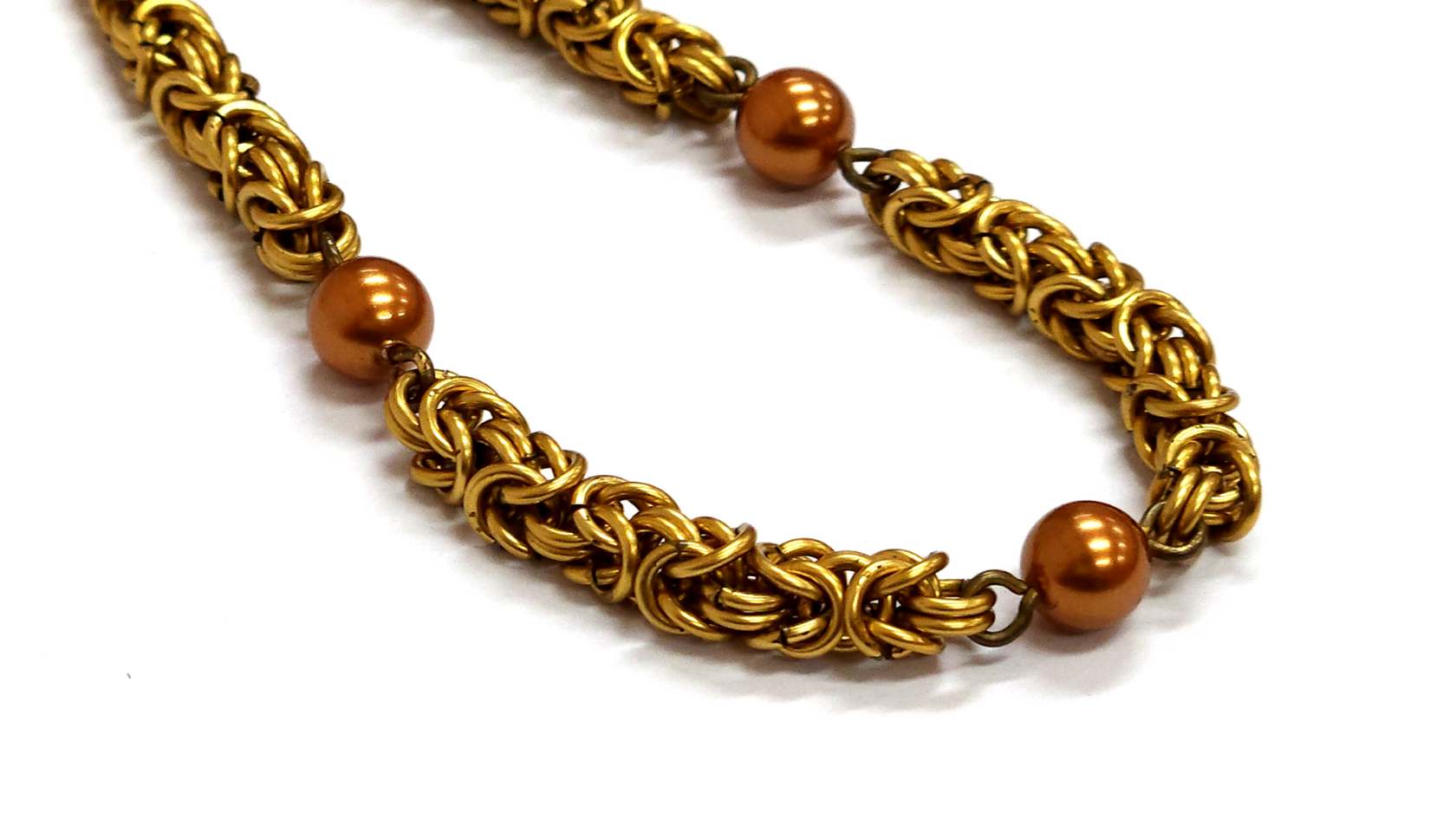
A strung pearl and bead necklace with a finished clasp — simple materials, professional result.
Stringing looks like the simplest thing in jewellery — thread beads on a line,
add a clasp, done. The gap between that and a piece that survives three years
of daily wear is a handful of small, learnable decisions.
The three stringing materials
- Nylon-coated cable (multi-strand stainless) — the workhorse: strong,
kink-resistant, needs crimps. Choose 7-strand for drape, 19- or 49-strand
for strength. - Silk thread — the traditional material for pearls and knotting; drapes
beautifully, always knotted between beads, stretched on a silk board. - Nylon/monofilament — cheap and invisible, but ages stiff and brittle;
acceptable for children's craft pieces, not for jewellery you sell.
The crimp, done properly
A crimp is a small metal tube that pinches the cable to a clasp. The amateur
move is flattening it with pliers; the professional move is a two-step roll
with crimping pliers that turns the tube into a neat cylinder with the cable
channels separated. Position it with slight tension, never bone-tight — the
piece needs micro-movement to drape.
Knotting between beads
Knots serve two purposes: they keep beads from scattering if the strand
breaks, and they protect soft beads (pearls!) from touching each other. The
classic tool is an awl or a knotting tool; the skill is consistency — knots
sitting snug against each bead, all the same size.
Termination checklist
- Crimp tube sized to the cable (2×2mm for most)
- Crimp cover to finish the look
- A wire guardian or french wire where cable meets heavy clasps
- A tiny drop of appropriate glue on the final knot — never as a substitute
for a correct termination
Learn it hands-on
Stringing is the opening module of the
Fashion Jewellery essentials course
at JDMIS — taught with professional materials, in one structured session.
Or taste it in a
one-day workshop
first. Every technique here appears in the
techniques guide family map.
Questions people actually ask
What is the strongest stringing material for bead jewellery?
For most pieces, multi-strand nylon-coated stainless cable offers the best balance of strength and drape. Silk thread is the classic choice for knotted pearls. Match the material to the bead weight and hole size.
Why do crimps fail?
Almost always because they were flattened instead of rolled, or positioned without tension. A properly rolled crimp looks round, holds firmly and never saws the thread.
What students say
“There is a very wide range of jewellery design programmes. Tanja's an expert and she encourages the class and is also open for catch-ups later.”
— Cecilia O. (Singapore) · published student feedback
“If you want to understand about jewellery, come to JDMIS.”
— Darvina P. (Singapore) · published student feedback
Free ways to explore
No sign-up, no payment — start with any of these.
The school's free guide to gems — reading companion to the webinars.Free gem webinar replaysFREE
Full recorded sessions on gems and the jewellery trade.Play Name That GemFREE
The school's free gem-identification game — addictive.The complete course guideFREE
Every course, family and diploma in one PDF.
Turn beading into a certified skill
JDMIS in Singapore runs hands-on fashion jewellery and beading courses, from one-day workshops to a full Fashion Jewellery Arts diploma.
Visit jdmis.edu.sg